
How to recognize a dystopia
Or, what the sci-fi filmmakers missed.
to read: The Privacy Project series at NYT (2019)
to watch: The Fifth Element, War Games, Gattaca, the list goes on
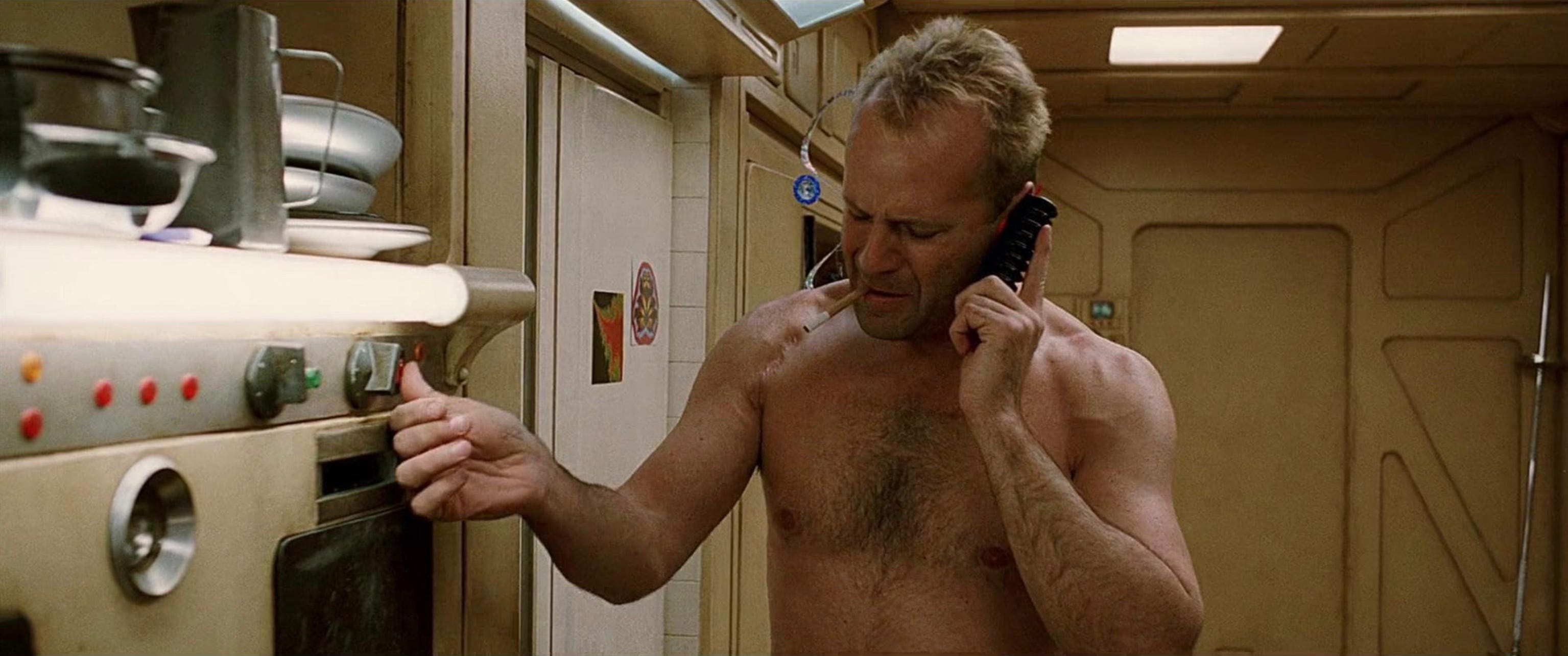
Remember that first moment we meet flying-cab driver Korben Dallas (aka Bruce Willis) in The Fifth Element? He is wakened by an Alexa-like voice emitting from a wall-mounted device in his little living pod, somewhere in a “South Brooklyn, New York” packed full of miles-high buildings. While there are also spaceships and alien beings, Korben is an ordinary human earthling just trying to get through his day, like the rest of us. Still, it’s 200 years in our future. The car knows him, and knows his route. The police have facial recognition capabilities. There is no privacy on this earth, no way to move about unmonitored, because there is a scanner and tracer for literally everything, cameras everywhere.
None of that feels like science fiction anymore, obviously — in fact, the way it’s depicted makes it look not just current but dated — but even now we can immediately recognize this as a dystopian movie vs a utopian one. Not because of what felt like a terrifying, unthinkable erosion (or absolute obliteration) of personal privacy when it was released in 1997. But because the living pod is grimy, Korben is generally unclean looking, and so is the air through which he promptly maneuvers his flying taxi cab — until he needs to hide from the cops, at which point he descends into “the fog,“ an even denser smog layer closer to the ground.
Someone should do this (surely someone has?): Go back and watch all the sci-fi movies of the late ’80s to early aughts, all those cautionary tales unheeded, and map out what they got right (e.g. the suveillance economy) and wrong (still no flying cars). Which technologies have come true (genetic pre-disposition testing). The things that clearly should never be done but we’re now doing anyway (artificial intelligence). And so on. But even without such a survey, it’s clear there’s one thing they got almost uniformly wrong.
In 2019, the New York Times ran an incredible package about the state of technology called The Privacy Project, which still should be required reading. Within that, there was a video clip in which Jaron Lanier, talking about how we freely give away our data to corporations, threw up his hands and said, “What does it take for people to recognize a dystopia?” And I don’t think a single day has gone by that I haven’t repeated that in my head.
How do we live in the very dystopia described above without realizing we’re not only living it, but we’re willingly participating in it, even actively helping to create it. (Did anyone imagine this part?) It isn’t some evil overlords who installed a vast web of tiny surveillance cameras in doorbells all across the country. We did that. It isn’t the government inserting a tracking pixel into nearly every website, from which Big Tech builds a detailed record of our every move, desire and purchase. Millions of advertisers, big and small, placed those trackers into their sites themselves. And we install and/or agree to the nonstop surveillance, again and again, while complaining that our phones (and homes, and cars) are listening to us, because it gets us the illusion of safety or the reality of “better ads.”
(While what it gets the tech companies is billions.)
It seems to me the one simple thing the sci-fi filmmakers got wrong — where they failed us, you could say — was they either couldn’t envision or couldn’t depict that when their imagined dystopia arrived in the modern west, the world might still look just the way it had. The sky would still be blue, the grass still green, the commoners’ clothes still clean. That was how we recognized a dystopian world versus a utopian one. Grime.
And that’s why it’s not until our skies turn orange from wildfire smoke, or we are poisoned by our industrially grown produce, that we get a glimpse of our dystopian present — at least for that moment. Until the next perfectly targeted ad catches our eye.
.
See also: Machine, learning
[IMAGE: publicity still from The Fifth Element]